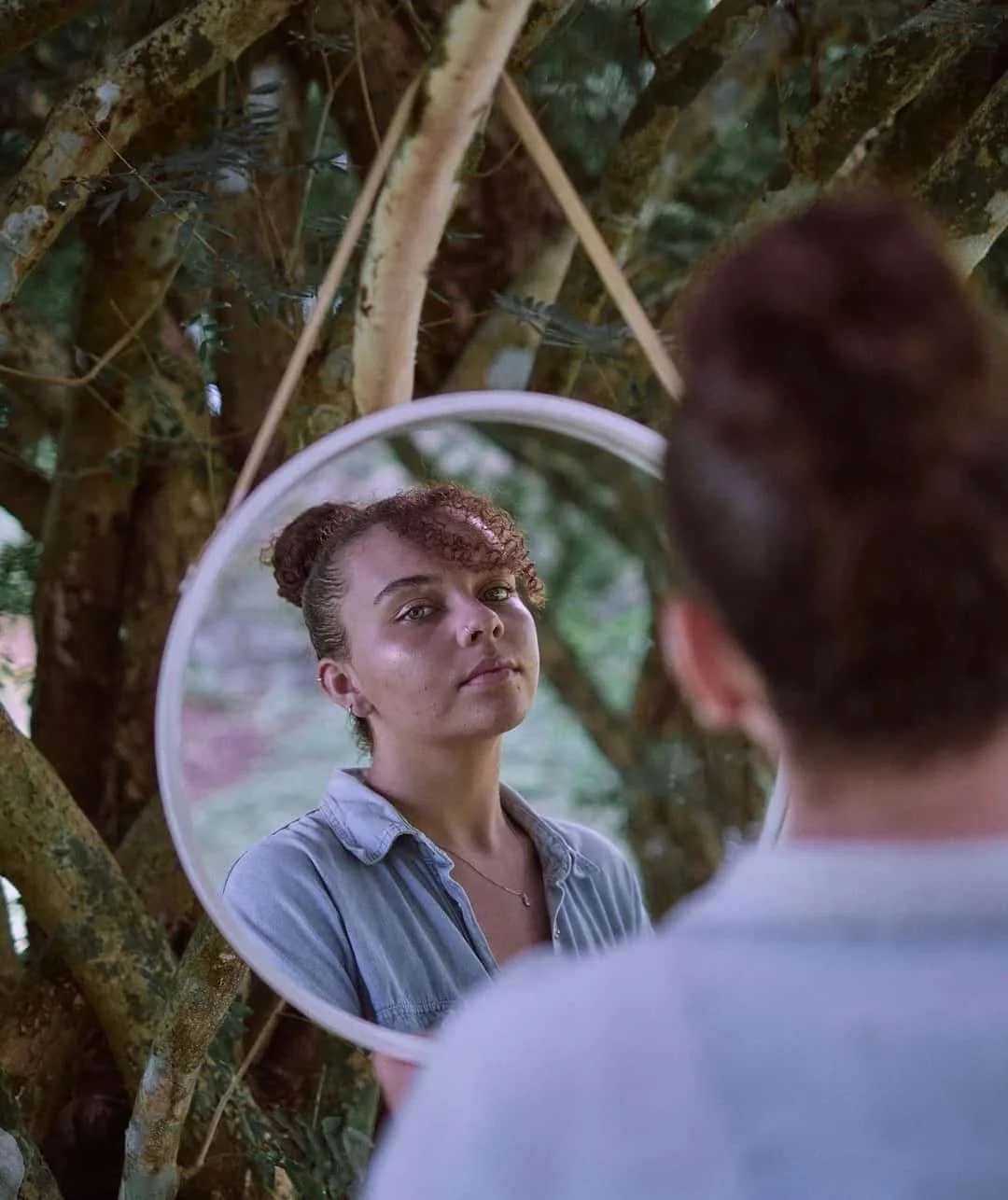
Have you ever caught yourself saying things like, "I've always been this way"?
Maybe you've described yourself as an overthinker, a people-pleaser, hyper-independent, or someone who always has to stay busy. Perhaps you've come to believe you're simply the responsible one, the high-stress one, or the one who always takes care of everyone else.
Most of us have ways of describing ourselves that feel so familiar we rarely stop to question them.
But one of the things I've come to appreciate most through my own healing and in the work I do with clients is that many of these ways of being didn't appear out of nowhere.
Very often, they developed for a reason.
Sometimes What Feels Like Personality Began as Protection
As children, we don't get to choose the environments we grow up in.
Instead, we learn how to adapt to them.
If staying quiet helped avoid conflict, you may have learned to make yourself smaller.
If being helpful helped preserve connection, you may have become the person who takes care of everyone else.
If you had to anticipate other people's moods in order to feel safe, you may have become highly aware of what everyone else is feeling before you ever learned to notice yourself.
These responses aren't signs that something is wrong with you.
They're often intelligent ways your nervous system learned to navigate the world around you.
At one point in your life, they may have helped you feel safer, stay connected, or make sense of experiences that felt overwhelming.
Over Time, Adaptation Can Begin to Feel Like Identity
The longer we live with these patterns, the easier it becomes to believe they're simply who we are.
What once began as protection slowly becomes part of our identity.
You may find yourself saying things like, "I'm just someone who overthinks everything," or "I've never been good at asking for help."
Those statements often feel true because they've been true for such a long time.
But there's an important difference between saying, "This is who I am," and wondering, "Could this be something I learned to do?"
That question isn't about blaming your past or trying to figure out exactly where every pattern came from.
It's about creating enough curiosity to recognize that who you've had to be may not be the whole story of who you are.
Healing Creates Space for More Choice

One of the things I love most about this work is watching people begin to recognize the difference between themselves and the strategies they've carried for years.
The goal isn't to stop being thoughtful if thoughtfulness is one of your strengths.
It isn't to stop caring about other people or to become someone who never worries.
Healing isn't about getting rid of the parts of you that once helped you survive.
It's about gently noticing when those parts have taken over and are making decisions that no longer fit the life you're living today.
The more awareness you develop, the more choice becomes available.
Instead of automatically saying yes, you may pause long enough to notice what you actually want.
Instead of assuming you have to carry everything yourself, you might allow someone to support you.
Instead of believing you have to earn your worth through being useful, productive, or needed, you may begin discovering that your worth was never dependent on those things to begin with.
Those changes rarely happen all at once.
More often, they unfold slowly, one small moment of awareness at a time.
You Are More Than the Ways You've Learned to Survive
Healing doesn't ask you to become someone different.
In many ways, it's the opposite.
It invites you to become more fully yourself.
As the adaptations that have shaped your life become easier to recognize, they begin to loosen their grip. They don't disappear, and they don't need to. Many of them still carry wisdom, care, and strengths that deserve to be honored.
But they no longer have to be the only way you know how to move through the world.
Over time, you begin relating to yourself with more curiosity than certainty. Instead of assuming, "This is just who I am," you begin asking, "Is this who I am, or is this something I've learned to do?"
That question alone can create room for something many people haven't experienced in a long time: choice.
Reconnecting Through Somatic Therapy
This is one of the reasons I'm so drawn to somatic therapy and depth-oriented work. Together, we gently explore the patterns that have shaped the way you relate to yourself, your body, and your relationships—not to get rid of them, but to understand them. As those patterns become easier to recognize, they often begin to soften, creating more space to respond from choice rather than from old survival strategies.
If you've spent much of your life feeling defined by the roles you've carried or the ways you've learned to cope, healing doesn't require you to become someone else. It offers the opportunity to reconnect with the parts of yourself that may have had less room to exist all along.
I’d love to connect if anything about this resonates.